







Knihy
- PŘIPRAVUJEME
- Astrologie, ezoterika
- Audioknihy - mluvené slovo na CD
- Cestování, mapy
- Dárkové publikace
- Dítě a rodina
- Dokument
- Domov
- Historie
- Hudební cizojazyčné
- Jazyky
- Kalendáře, diáře a poznámkové bloky
- Krásná literatura
- Naučná a odborná literatura
- Periodika
- Pro děti a mládež
- Regionální literatura
- Sci-fi, fantasy
- Slovenská literatura
- Učebnice
- Umění
- Zdraví a životní styl
- Ostatní a nezařazené

Důležité informace
- Ochrana osobních údajů
- Obchodní podmínky
- Jak nakupovat
- Jste u nás poprvé?
- Kontaktujte nás
- Dostupnost titulů
Bestseller
- Simon & Garfunkel
Essential Simon & Garfunkel - Guy Buddy
Born To Play Guitar - Hackett Steve
Please Don't Touch - Norum John
Gone To Stay - Pausini Laura
Io Canto 2 (Deluxe Edition) - Private Life
Shadows / Private Life (Reissue) - Aldana Melissa
Filin - Black Crowes
A Pound of Feathers - Quatro Suzi
Freedom - Morse Neal
Morsefest 2015 And Sola Scriptura Live - XTC
Go2 - Townsend Devin
Devolution Series #3 - Empath Live In America - Pausini Laura
Hazte Sentir Mas - Pausini Laura
Anime Parallele - Posies
Every Kind Of Light
Abecední index


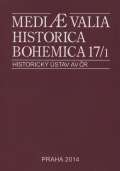
Mediaevalia Historica Bohemica 17/1
 Seznam všech titulů autora
 Všechny tituly se seznamy skladeb
 Všechny tituly s hudebními ukázkami
15% sleva
- Typ zboží: Kniha
- Dodání: do 14 dnů (klikni pro bližší informace k dodání)
- Vydavatel: Historický ústav AV ČR, v.v.i.
- Vydáno: 20.3.2015
- Objednací kód: 2274821
- Běžná cena: 264 Kč
- Naše cena: 224 Kč (vč. DPH)
- Ušetříte: 40 Kč (15%)

- jazyk:
čeština, angličtina - počet stran:
208 - vazba:
brožovaná
Kateřina CHARVÁTOVÁ
Počátky působení cisterciáckých opatů Dětřicha, Heidenreicha a Konráda na dvoře Václava II. The beginnings of the activity of the Cistercian abbots Dietrich, Heidenreich and Konrad at the court of Wenceslas II
(s. 7–39)
The article deals with two topics. In the first part, it follows the personnel policy of the Cistercian Order in Bohemia, namely using the examples of the monasteries of the order’s line coming from the monastery of Waldsasson, on which he shows how this policy was systematic. The order sought prospective members, raised them and subsequently placed them in necessary positions. In the second part, the text deals with the question of whether the abbots Dietrich of Waldsassen, Heidenreich of Sedlec and Konrad of Zbraslav came to the court of Wenceslas II at the end of the 1280s to support Habsburg interests here. The consideration that they could serve at the sovereign court as allies of Queen Judith against Záviš of Falkenštejn, remains only a hypothesis.
Eloise ADDE-VOMACKA
Volba krále a tyranovražda. Návod k ustavení politické role české šlechty v Dalimilově kronice. The election of the king and tyrannicide. Instructions for establishing the political role of the Czech nobility in the Chronicle of Dalimil
(s. 41–88)
The study focuses on the Chronicle of the So-Called Dalimil. In contrast with the traditional perception of this source dominated by ethnic and nationalistic accents, the author here tries to reveal the ideological layers and devotes special attention to the questions of the legitimacy of the power of the king and the contracts that connected the sovereign with the „community“, i.e. with the nobility. The first part of the paper treats Dalimil’s conception of the right to resist (ius resistendi) and his justification of the uprising of the nobility against the sovereign who violates his mission and the interest of the „community“. The second part addresses the issues of tyranny and tyrannicide in the Middle Ages and treatment of this topic by the So-Called Dalimil.
Martin NODL
Ekonomie nemoci a milosrdenství ve středověku. The economy of illness and mercy in the Middle Ages
(s. 89–104)
The study focuses on the relation of the medieval person to illness and physicians, particularly taking into account the economic accessibility of treatment and the overall social dimension of the issue. It first deal with the costs for medical care and the different treatment methods, which considered the social position of the patient. It further also introduces the possibility of community, care in spittal fields, and last but not least also the influence of magical practices and faith in the miraculous abilities of the saints.
Martin ŠORM
Tandariáš, Floribella, a medievista. O mnohých zapomněních jakožto zjemňujícím programu středověké artušovské fikce. Tandariáš, Floribella, and a medievalist. Numerous oblivions as a refining program of the medieval Arthurian fiction
(s. 105–125)
The study presents the Arthurian novel Tandariáš a Floribella from the end of the 14th century as an independent historical source, and indicates some possible routes to approach it from the perspective of historical-literary anthropology. It deals with the interpretation of those passages in which the anonymous poet in keeping with the tradition of German and French courtly novels thematised forgetting oneself, reflection and the epistemological importance of passivity or pain of the protagonist – the knight. The author interprets them as a means of the refinement and cultivation of the audience. He shows that the novel did not lead the noble audience to an internalized Christian conversion or moral improvement. Under the guise of entertainment, it rather encouraged them to think and to discuss the basic rules, organization and values of courtly society.
Tomasz GRAFF
Biskup krakowski Zbigniew Oleśnicki (1423-1455) wobec husytyzmu i polityki polsko-czeskiej. Bishop of Cracow, Zbigniew Oleśnicki (1423-1455) against the Hussite movement and Polish-Czech policy
(s. 127–167)
The article concerns the attitude of the Bishop of Cracow, Zbigniew Oleśnicki to the Hussite doctrine and to the proposal of assuming the Bohemian throne by the Jagiellonian dynasty in the 20s and 30s of the fifteenth century. The author analyzes the attitudes and activities of the bishop in the light of the sources of the period as well as in the light of the opinions of historiography. A special attention is devoted to the criticism of the account given by a chronicler Jan Długosz, who was particularly interested in making Zbigniew Oleśnicki a principled defender of the faith against the Hussite threat.
II. Literatura
Dvě řady o dějinách největšího moravského města Brna a hlavního města Slovenské republiky Bratislavy
Dějiny Brna 1. Od pravěku k ranému středověku, Rudolf Procházka (ed.), Brno 2011
Dejiny Bratislavy 1. Od počiatkoch do prelomu 12. a 13. storočia. Brezalauspurc na križovatke kultúr, Juraj Šedivý – Tatiana Štefanovičová (edd.), Bratislava 2012 (Zdeněk Měřínský)
(s. 171–182)
Gotické kamnové kachle na Písecku. Výběrový katalog výstavy Obrazový svět pozdního středověku, Jaroslav Jiřík – Jan Kypta (edd.), Písek 2013 (Robert Šimůnek) (s. 182–186)
III. Kronika
Kolokvium Editorství a edice středověkých pramenů diplomatické povahy v České republice na úsvitu 21. století. Směry – tendence – proměny (Pavel Hruboň)
(s. 189–193)
Potřebujete podrobnější informace k tomuto titulu? Napište nám.
Hlídací pes - zasílání novinek:
Přehled všech Vámi zadaných položek naleznete zde
Nejbližší tituly v katalogu:


Bestseller ČR
- Tata Bojs
V původním snění - Burian Jan
Boží koncert - Vivaldi Antonio
Koncerty pro zobcovou flétnu / Recorder Concertos - Zajíček Pavel
Krveprolití a jiné básně... - Mišík Vladimír
20 deka duše - Janda Dalibor
Hurikán - Vřešťál Zdeněk
70 - Merta Vladimír
Nebe nepočká
